Tuesday, January 14, 2014

The Versailles Legacy


We first met Erich von Schellendorf, née Foster, in 1912 when estrangement from his overbearing father drives him to finish school, not at Cambridge as planned, but at his mother’s ancestral home of Heidelberg.  His love for the capricious daughter of a Prussian Baron and retired cavalry officer moves him to enlist in the military for a term that inescapably draws him into the war on the German side.  Fast forward to 1933 and we find Lieutenant Colonel von Schellendorf training a military equestrian team for the infamous 1936 Olympics that Hitler so badly wants to support his contention of Aryan supremacy.  Erich’s unswerving loyalties to both Germany and his wife are sorely tested by Hitler’s brutal fanaticism and Britt’s unresponsiveness.  Erich finds solace in horsemanship and the camaraderie of his team until a British spy and a honey trap threaten to unhinge his entire existence.


Through the lens of retrospection, the Treaty of Versailles could have led to only one outcome.  It, in essence, created Hitler and the Nazis.  Lyn Alexander’s sequel to The Officers’ Code offers an insightful look into the collective mind of a defeated power via the psyche of an eyewitness.  The emotional tension building within Erich von Schellendorf as the Nazis rise and his marriage sinks is shown to us with masterful style.  The brilliant character development of Britt, from the damaged victim of incest to a manipulative wife, in deep denial of fratricide, who uses the withholding of affection as a weapon, is as penetrating as any ever created by the likes of Hemingway.  Lyn Alexander knows Germany, horses and human emotion and she knows how to bring all that knowledge to the page.  The Versailles Legacy is a great sequel and a terrific standalone story.

Only available in paperback at this time, but I'm nagging Lyn to go digital.
Buy at Amazon

Friday, January 3, 2014

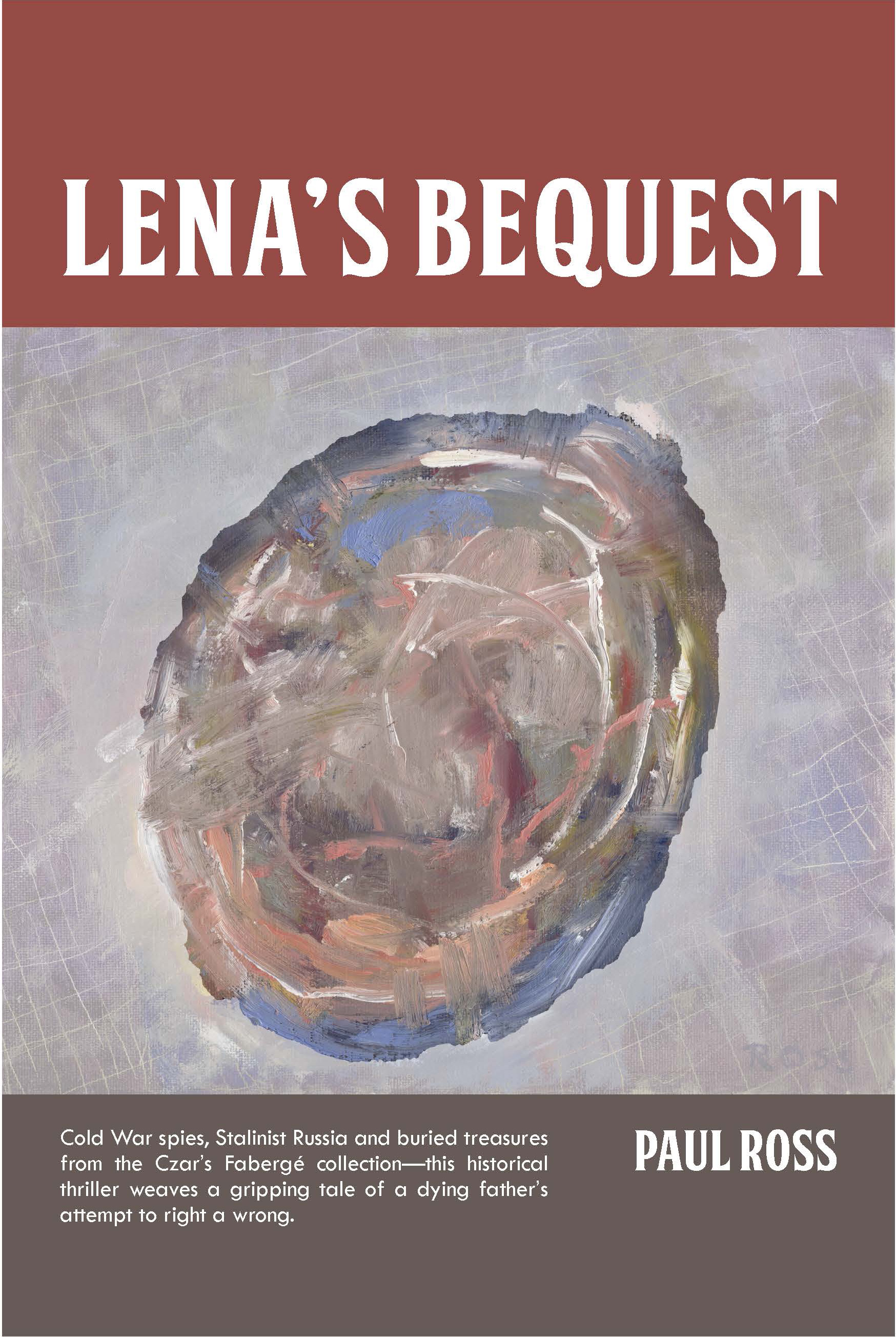
Lena's Bequest by Paul Ross


Gardening was all that Lena had in mind when she rented an isolated house in the empty flatland of Northwestern Ohio.  That changed abruptly the day an elderly stranger with an eastern European accent startled her while she was tilling the soil.  That unnerving event set in motion a deadly treasure hunt populated hick sheriffs, a Russian mobster and his rapine grandsons, spies, refugees and the specter of her absent father.  Karl, the mysterious stranger, fed Lena, in tidbits, a story of her late father’s astounding life and unlikely bequest.  Lena is a very capable young woman with street smarts who never really trusts Karl, as well she shouldn’t, but the lure of a treasure hunt and the credibility lent to it by the attention of mobsters tempts her to go along.  Karl insists that the search must begin in New York City where Lena is stunned to learn that she owns healthy bank accounts and a midtown apartment.  Then the trail gets hot.

Lena’s Bequest is told in flashbacks to Stalin’s purges in the Ukraine.  The story of her father’s escape from murder, starvation, deportation and his eventual flight to the west is a disturbingly truthful look at the conditions in, and as a result of, the Gulag.  How the atrocities of those decades of institutionalized starvation, slavery, torture and murder might impact a modern woman grappling with life in twenty-first century America is a highly plausible and fascinating tale.  Paul Ross has an extremely well written and researched book that will appeal to history lovers, fans of action and suspense as well as readers who like a strong female lead character.

Price: $4.99
112,860 Words

Saturday, December 28, 2013

Eight Days in August by Dana George


Annie Logan didn’t belong in the makeshift Union jail.  When they razed the building she fell unconscious to the street, potentially into the hands of rapacious soldiers.  Despite her peril, Annie is initially annoyed at being rescued by a shady pair of locals, Duncan and Tom.  Duncan is good-hearted, compassionate and married to a suspicious shrew.  Tom is disagreeable, cranky and nominated to give Annie a place of refuge until she can find her way home to the father Tom considers to be a dangerous enemy.  The story unfolds against the backdrop of atrocities perpetrated by both Union and Confederate militias on the civilian population of divided Kansas.  Spies, turncoats and despots who wreak havoc on the countryside overrun the state.  Annie’s plight is complicated by her father’s partisanship, her rescuers’ duplicitous natures and devotion to a mountainous woman who is Tom’s childhood friend.


Eight Days in August by Dana George is a classic Clint Eastwood style western interwoven with the complicated loyalties bred of the Civil War.  It offers the reader action, intrigue, romance and history.  The depth of Mrs. George’s characters draws the reader into a story that moves with an excellent pace toward a timeless and satisfying resolution.  The broad appeal of this book defies categorization.  Anyone looking for good, solid entertainment is going to enjoy Eight Days in August.

78,930 words
Price: $.99  (Well, worth a buck!)


Buy at Amazon

Saturday, December 21, 2013

Hamfist Down by G. E. Nolly


Shot down on his final reconnaissance flight over Cambodia, Hamilton Hancock (Hamfist) hangs from his parachute harness in the canopy until daylight when he is able to find his way to the ground, then he has to evade the Viet Cong until Search and Rescue can extricate him.  He almost escapes unscathed.  A burgeoning romance with a Japanese-American beauty helps motivate Hamfist’s recovery and guides his military career decisions.  Then he has one more incident over the clandestine battleground during the illegal incursion into Cambodia and Laos during the Viet Nam War.


Hamfist Down is a gritty, true to life depiction of an airman’s experiences during that secretive and unpopular war.  George Nolly writes from experience in the jargon of the time and place.  Hamfist’s character development portrays him as both hardboiled and sensitive and one suspects that he is the author’s alter ego.  This fast paced, relatively short slice of history succeeds more with realism than drama.  It is an entertaining window into a period of American history that has not always been truthfully told.

37630 Words
Price $3.99

Buy at Smashwords 

Buy at Amazon

Wednesday, December 18, 2013

The Bad Apple


The weather deteriorated rapidly after leaving Chief Red Hawk in Southampton County, Virginia.  Our next stop was Arlington where we were determined to visit a friend at the National Cemetery.  Once more the GPS bitch tried to kill us.  Sometimes I question whether she is malignant or simply blond, but the conundrum of DC area freeways was more than her geosynchronous brain could handle.  In truth it wasn’t completely her fault that we crossed and re-crossed the same interchange twenty times.  Road conditions were worsened by the snow, construction—ubiquitous construction, trucks and Democrats.  Regarding construction, the whole national highway system is under repair which is a two edged sword.  It certainly needs it after long dark decades of neglect that allowed our once superb roads to lapse to into a bone jarring disgrace of misspent public money.  The downside of highway restoration is the superabundance of those “Fines Doubled” signs.  The offensive things are everywhere.  Construction was completed two years ago, or ten miles ago, but the signs are still there, or appropriation of funds is pending a vote in the next legislative session, but those cunning politicians know they can raise revenue by putting the signs out immediately.  My objection is the concept that highway workers are somehow twice as precious as the rest of us.  Of course the legislators are not the least concerned for the poor muddy schmucks idling behind the K-rails, they are only thinking of money.  Some states are more creative than others.  New Jersey doesn’t bother with the construction zone myth, they double fines if the speed limit is sixty-five.  Other states double fines in “Safety Corridors.”  What the hell is a Safety Corridor?  Are they saying that on rest of the road it is okay to be unsafe?  Texas probably has the most rational rules of the road.  Whoever sets Florida’s speed limits is either bipolar or rolls dice to decide how fast people should drive on any given mile of highway.  New Jersey and New York’s speed limits are totally insane and they are universally ignored, well, speed limits are universally ignored everywhere, aren’t they?  As for our home state, California is just plain stupid.

Enough ranting about the foolishness of state and local government, let’s get back to the cemetery.  Arlington, once you find it, is stunningly beautiful.  The endless identical markers standing in ranks on the rolling hills of Robert E. Lee’s confiscated home strike the first time observer viscerally.  The staff in the visitors’ center was extremely efficient at directing us to the grave we wanted to visit.  Lou Mauro, air force colonel, veteran of WWII and Korea, professional football player and long time family friend, rests near the leading edge of the endlessly growing field of white stones.  We were moved paying our respects, however hurriedly the weather forced us to do it.  That same weather convinced us to skip visiting the Eternal Flame, the Tomb of the Unknown Soldier and the Marine Corps Memorial which, at the end of the day, was a wise decision because the ice storm worsened to the extent that the Outback Steakhouse adjacent to the Holiday Inn of Laurel, Maryland closed two hours early.  We were some of the last to dine in relative comfort and plenty that evening.  Everyone else in the elevator clutched pizza delivery flyers.  Presumably pizza delivery boys are braver than the manager of the Outback Steakhouse.


We weren’t on Manhattan fifteen minutes before I hated it.  The usurious tolls beginning in Maryland and culminating in a thirteen-dollar larceny at the Lincoln Tunnel should dissuade any reasonable person from proceeding, but we had prepaid reservations at a converted brownstone in the lower west side with a room rate close to twice what we paid for a really nice place on Key West.  Before we could inspect our accommodations we had to unload three-hundred pounds of baggage without the boon of a loading zone.  Double parking on Manhattan is as common as potholes but I wasn’t there two minutes with my flashers blinking and traffic passing freely before one of New York’s finest, finest pig maybe, stopped on my bumper, blocking the street, and honking until I felt obliged to flee.  Barricaded avenues, prohibited left turns and exclusively one-way streets kept me circling for fifteen minutes until I found my way to where Sandy and the innkeeper crouched in the doorway.  Of course there was no alternative to double parking, and in the absence of malicious cops, nobody gave it a second thought.

The room was surprisingly large and tolerably warm if somewhat shabby in its appointments.  One could almost squeeze into the bathroom while shutting the door but there were no surfaces on which to set toiletries.  The back of the toilet was cunningly sloped so that anything placed on it slid into the bowl.  We were naive in thinking that an exorbitant price assured maid service.  We did see her, however, when she brought an armload of towels that we didn’t need but refused to make the bed or rinse the glasses.  A sign outside the window informed us that we were in Historic Chelsea.  I believed it’s historic.  The last time it was updated the Dutch owned it.

Fools that we are, we didn’t linger in the relative luxury of the room, we charged into the rain and gale walking thirty blocks to see the Christmas festivities at Rockefeller Center which would have been nice but for all those annoying people.

We had drinks and dinner in an iconic place called P.J. Clarke’s which was pleasant enough until you tried to move.  Opening the door to the restroom required the displacement of at least a dozen people.  Our effervescent waitress warned me to take note of the ancient urinals which were as tall as I was and must have contained four or five hundred pounds of porcelain apiece.  I tried to photograph them surreptitiously using Sandy’s phone but it was too dark.  The shepherd’s pie was average.  Sandy’s burger with three types of chiles was better—she always makes better choices than I do.

In the morning we took the subway to visit the Ground Zero Memorial.  One might expect it to be easy to find—one unfamiliar with the obfuscating nature of New York, that is.  We slogged around in the freezing rain for an hour, following locals’ misdirection, until we stumbled onto a banner lashed to a construction fence that pointed to the entrance.  One doesn’t simply walk to the brink of the abyss and pay his respects.  No, one must enter labyrinthine queues depending on whether you are preauthorized or hoping the passes aren’t all gone.  Early on a miserable day the passes were plentiful but leaving a donation and receiving a pass is not free passage to the site.  There is airport style security to negotiate.  The only outrage we didn’t suffer was removing our shoes.  In my opinion, making visitors run that gauntlet to see the 9/11 memorial is tantamount conceding that the terrorists won.

The memorials themselves, one covering each of the footprints of the two towers, are eerily appropriate.  Everyone having seen them on the news knows that they are rectangular chasms surrounded by a parapet with the names of the victims incised on the broad, black top.  Curtains of water falling from all four sides are artfully contrived to minimize turbulence when it crashes to the floor of the fountain.  Ultimately the water flowing into a seemingly bottomless pit at the center of the pool is darkly appropriate for what took place there.

More than 1.6 million residents share Manhattan with at least that many commuters and uncountable tourists, but there are only two public toilets—one in Grand Central Station and the other I’m generously conceding must exist somewhere.  A pot of coffee followed by a couple hours in the cold rain is a recipe for urgency.  We had hopes of a warm, comfortable lunch in some cozy tavern redolent with history, but my bladder droves us to Charley’s Pizza & Deli where one serves themselves and waits for access to the only functioning restroom.  It was dingy, drafty and fell far short of our lunchtime expectations.  Later we made our way to Wall Street to shoot the bull, but the famous Charging Bull of those heady days when the Dow closes above sixteen-thousand is not on Wall Street.  It is at the foot of Beaver Street—yes, Beaver Street.  Whose idea was that?

We sought refuge in Starbuck’s for a little warmth and access to another bathroom.  Everyplace you enter to buy something legitimizing access to a toilet seems to have two restrooms but one is out of order so there is always a line.  One quickly learns to join the queue before the matter becomes desperate.  Being close to Battery Park, we decided to brave the tempest to get a look at the Statue of Liberty which was hazily discernable through the mist.  Battery Park is a shambles of construction barricades and fences.  We had to dodge puddles and muddy walkways to reach the ideally framed vantage point to view the statue where we found the ever-present cop idling in his car beneath a sign that said, “No pictures from this point.”  It really said that!  In a public park with a perfect view of one of the most photographed American treasures some miscreant tries to prevent people from taking pictures.  Hurricane Sandy was having none of it.  She got her pictures and the cop was too warm and lazy to stop her.

That night we had a pleasant evening with our friends, Sherban and Christina, California exiles counting the days until their repatriation to Claremont.  Sherban supplied me with a prophylactic dose of gin and Christina showed us how to navigate the subway to a station a few blocks closer to our historic hotel.  Nevertheless, we were still chilled to the marrow before we found our unmade bed.  The problem, at least for a novice, is emerging from the underground without landmarks.  No matter which direction you choose to proceed, inevitably within two blocks you know you are one-hundred and eighty degrees off course.

How anyone could claim to love New York is beyond me.  This was my second visit and I had some slight hope that I would see it in a better light than on a miserable Christmas Eve in 1968.  It was a vain hope.  Aside from the wretched climate, the place suffers from excess and scarcity—too many buildings, too little space, way too many people completely self-absorbed.  To move about Manhattan one must abandon every notion of courtesy, be immune to pushing, obstruction and reeking hoards of simply rude smokers crammed in doorways beneath signs prohibiting their vile habit.  The squalor and inadequate sanitation must not bother you and you must be unconcerned that in all likelihood your car will not leave the island without being sideswiped on the too narrow streets.  The whole place is crumbling and redevelopment aims at property value rather than restoration.  The prices are exorbitant and value imaginary.  Concentrating such an excess of people into such a confining space strips the humanity from the human.  Rats go mad when forced to live in hyper populated pens, apparently so do New Yorkers.

On balance I will say in fairness, Sandy loves the place and can’t wait to return without me.

Saturday, December 14, 2013

A Passel of Hate


When most people think of pivotal Revolutionary War battles, they focus on Lexington and Concord, Bunker Hill, Trenton and Yorktown.  In A Passel of Hate Joe Epley shows us the gritty truth about the key battle that took place on the Western Carolina frontier at a place know as King’s Mountain which paved the way for the end game at Yorktown.  The guerrilla war that had been raging in the piedmont of North and South Carolina escalated to a showdown when General Cornwallis sent Major Patrick Ferguson on a mission to recruit a substantial Tory militia in the area of modern Charlotte.  Simultaneously the Whigs were amassing a militia to deal with the threat.  The divisiveness of the times—not entirely unlike present times—saw families taking opposite sides, fighting while hoping not to kill loved ones and returning home to glare at one another across the dinner table.  Husband and wives took opposing sides, as did fathers and sons.  Often objectors were pressed into service on the side they detested under threat of the noose.  Few modern Americans would argue that the Revolution was anything but a just and necessary struggle for freedom, however, this was far from the case at the time.  Loyalists and Rebels were nearly evenly divided with plenty of plenty of the undecided simply wanting to be left alone.  A Passel of Hate tells the story of a decisive battle, and the prelude to it, via the personal viewpoints of the participants, exposing the barbarity perpetrated by both sides as well as the in fighting, primarily in the camp of the Whigs, and the complicating factor of concurrent Indian depredation.  Joe Epley shows us clearly how tenuous and costly American independence really was.


My love of history, and familiarity with the area where the battle took place, drew me to this book and I was not disappointed.  The pace is exhilarating, the depth of Joe Epley’s knowledge of the time and place is astounding and the prose satisfyingly straightforward.  The character development is excellent as well.  I have to say that the reader must pay close attention due to frequent point-of-view changes to avoid becoming lost in the labyrinth of partisan intrigue, but this did not detract from my enjoyment of the story.  I certainly hope Mr. Epley is working on his next offering.

Ebook price: $9.99

Buy at Amazon

Wednesday, December 11, 2013

An American Idyll, Chastened by the Chief


After surviving the gauntlet of the greater Miami megalopolis one might be lulled into the fantasy of an off-season escape to the quiet shores near Jupiter, Florida.  Don’t give it a thought.  Apparently no one ever goes there.  There were three fleabag motels between Jupiter and Port Saint Lucy that did not overtly advertise rooms by the hour, but we knew them when we saw them—not that we had experience in such places.  We finally found a place to stay after blowing through the turnpike tollbooth without a ‘Sunshine Pass’—expecting a ticket to be delinquent when we get home—in the middle of a construction site near Vero Beach with no hope of dining within a five-mile radius.  We settled for a TGI Friday’s with an annoyingly gay waiter who could not take an order without trying to enhance it.

As anxious as I was to leave the Sunshine State, I had always wanted to see the Spanish fort at St. Augustine and was cajoled by Sandy’s logic that I probably wouldn’t live long enough to have another chance, so we went.  Castillo de San Marcos is a wonderfully preserved stone fort, classically built, in a perfectly defensive position on the Matanzas bay.  Many of you would say it’s just another pile of rocks, but it’s the kind of rock pile that appeals to me.

Charleston was our goal but GPS, Scott’s poor route choices, and weather became serious obstacles.  We found ourselves deep in ‘Bubba-land’ during a downpour with headlights blinding my geriatric eyes for the last forty miles into Charleston.  A night at the Meeting Street Inn and dinner at Magnolia’s soothed our jagged nerves and put us back on the road the following sunny morning without partaking of Charleston’s charms.  It was a stellar day that lured us back to Georgetown to make that library call we had missed the previous Saturday.  It killed about three hours but we left with the marriage certificate of an obscure, long dead cousin, and that’s what genealogy is all about.

However, it made us late for our date with my niece, Wendy, near Williamsburg and we had to postpone it until Saturday so as not to miss our meeting with the Chief.  The Chief, you say?  I’ll get back to that, but passing through Georgetown reminded me of an anecdote that I should have related in the Thanksgiving episode.  Cousin Robin’s oldest daughter, Jean Marie, lovely, feminine blue-eyed blond, with an urge for blood, has been determined to kill her first deer for five years.  She is a fashion plate in the deer blind in her form fitted camo coverall with chic boots, cap and earmuffs, but do not doubt her deadly earnest.  Jean Marie’s Uncle Rockie delivered her and her fiancée, Richard, to separate blinds each dawn and dusk during our sojourn at Suttons—separate because Richard, the fool, considered his future bride not disciplined enough to shoot deer.  As it came to pass, on Friday evening we older folk were clustered around the fireplace when Jean Marie burst through the door floating on an ecstatic cloud of bloodlust.  She recounted sighting, firing and watching her quarry drop, motionless, with one shot, then she had to sit in blind without phone service, gnawing her manicured fingernails until Uncle Rockie returned to retrieve her, Richard and the prey.  There was much recounting of the details of the kill and infinite arguing over whether to photograph or field dress the hapless doe.  Doe?  You cry indignantly!  Yes, there are so many deer in that part of the state that restrictions on does have been suspended.  The punch line of the tale came when long suffering Richard finished the obligatory evisceration of the cadaver and Jean Marie held court around the hearth.  She said with determination, “I’m gonna get over this twinkle toes excitement and get back there to get me a ten or twelve point buck!”  Love those Southern Belles!

Fast forward to the recent past.  Friday night we sat poised for our rendezvous with the Chief Red Hawk of the Cheroenhaka Indians.  “What the hell?” you say.  So, you haven’t read the book!  Family Traits, my debut literary offering, is the story of how the Skipper clan arrived in the New World and their negative impact upon it.  A certain George Skipper somehow ingratiated himself with the Cheroenhaka Indians, aka, Nottoway Indians, and became a ‘Chief man’ of the tribe.

Some weeks ago I mailed a copy of Family Traits to the attention of Chief Red Hawk for his review with the hope that he would add a link to it on his website and/or put some copies in their tribal bookstore.  Shortly thereafter I got an email: “This is Chief Red Hawk, call me.”  Well, when the Chief calls, you reply.  He said that he liked the book very much, but where was the acknowledgement of the Cheroenhaka website?  He had me there.  I had failed to acknowledge anyone, or include a bibliography.  This long after the writing of it I really didn’t remember what came from where, but I did know that the Official Cheroenhaka website was either the source or the pointer to many of the facts I recounted in my story.  I could only dissemble.  Guilt aside, I very much wanted to meet this man.  He invited me to visit the Cheroenhaka reservation if I were ever in the area, and as luck would have it, I was going to be there this December.

We met in a waffle house for breakfast.  We knew the Chief as he crossed the parking lot by his ponytail and jacket with ‘Chief Red Hawk’ inscribed on the shoulders.  Here began a fascinating few hours.  Chief Red Hawk, aka, Walt Brown, is retired as a colonel from a long career in the Army, he has green eyes, a photographic memory and passion for breakfast.  While I nursed my eggs, grits and country ham, the Chief embraced tea, French toast, poached eggs—over done to his annoyance—sausage, grits, hash browns, toast and a big glass of milk.  He is a repository of history who talks fast and intersperses his narration with Cheroenhaka words, being one of five speakers of the language alive today.  My note taking skills could not keep pace.

When breakfast was done, we retired to the reservation.  Originally the Cheroenhaka received grants from the Colonial Government of the Colony of Virginia in the form of a circular and a square reservation comprising about forty-one thousand acres.  My ancestor, George Skipper and several other Chief men of the “Nottoway”, i.e., Cheroenhaka, were instrumental in selling all those acres to generally unscrupulously speculating, insider trading Indian trustees and their relatives.  Walt and his tribal council are determined to buy back at least a portion of those lands and to win federal recognition of the tribe.  They have already won state recognition and are not likely to fail in attaining federal acceptance given the Chief’s tenacity.

  
Our private tour of the recreation of Cattashowrock Town in the crux of the Nottoway and Blackwater Rivers where “The People of the Fork of the Rivers,” i.e. Cheroenhaka, thrived for millennia happened on a cold morning with occasional drizzle.  We got to see the recreation of the palisade that I outlandishly attributed in Family Traits to the ingenuity of George Skipper and the long house where I further claimed that George cavorted with Indian maidens.  The Chief took my presumptions with good humor.

The Chief and the tribe have acquired to date one-hundred acres of the former Square Tract where they intend to build a museum and cultural learning center.  As of this writing they have the partially complete palisade, longhouse, two single family houses, a sweat lodge—that would have felt good that morning had it been operating, a ceremonial center and several other examples of Cheroenhaka artifice.  In addition to the construction goals, the Chief and his followers are seeking the repatriation of more than a hundred skeletal remains excavated at the Hand Site and removed to the Smithsonian Institute where they now languish in shoeboxes.

Sadly, I am not eligible for membership in the tribe due a gap in my paper trail between Shadrach Skipper, born c. 1790, and George Skipper, Jr., who died about the same time Shadrach was seeing the light.  I will not relent in my quest for that document, nor will my wife, Hurricane Sandy, let me.  She is convinced the Cheroenhaka will someday have a casino and she wants to get a piece of the cash flow when the slot machines start spinning.

I want to thank Chief Walt, Red Hawk, Brown for his time and his forbearance, and I will rectify the oversight of not including an acknowledgement of the Cheroenhaka website as a source of the historical facts portrayed in Family Traits.  In my defense, I did not acknowledge any of my dozen or so sources and do not now remember what I took from the Chief’s work and what came from primary sources that I discovered independently, however, upon revisiting the Official Cheroenhaka Website, I realize that I didn’t need to look elsewhere.  I would have saved a great deal of time if I had studied it in depth and simply asked for permission to cite it.  It contains the fascinating history of the tribe in rich detail and I invite you to take a look at it at: http://www.cheroenhaka-nottoway.org/home.htm

Digressing a little, on the way to meet the Chief for breakfast, we passed within a mile of Skipper’s, Virginia, and could not resist stopping at the Good Earth Peanut Store.  The proprietor there is in Skipper denial.  He maintains the source of the town’s name is obscure and that there are no Skipper thereabouts.  However, he has a framed newspaper clipping from the seventies that suggests the name came from George Skipper’s 1685 patent of a piece of land in the area and that he may have also operated a trading post there.  I believe all that is probably true but the strongest evidence of Skipper influence is that the gentleman running the store is the spitting image of my grandfather.


Next time: Who the Hell Loves New York?